Meet the TheyDo Agent
Go beyond the call. Fix problems at the source
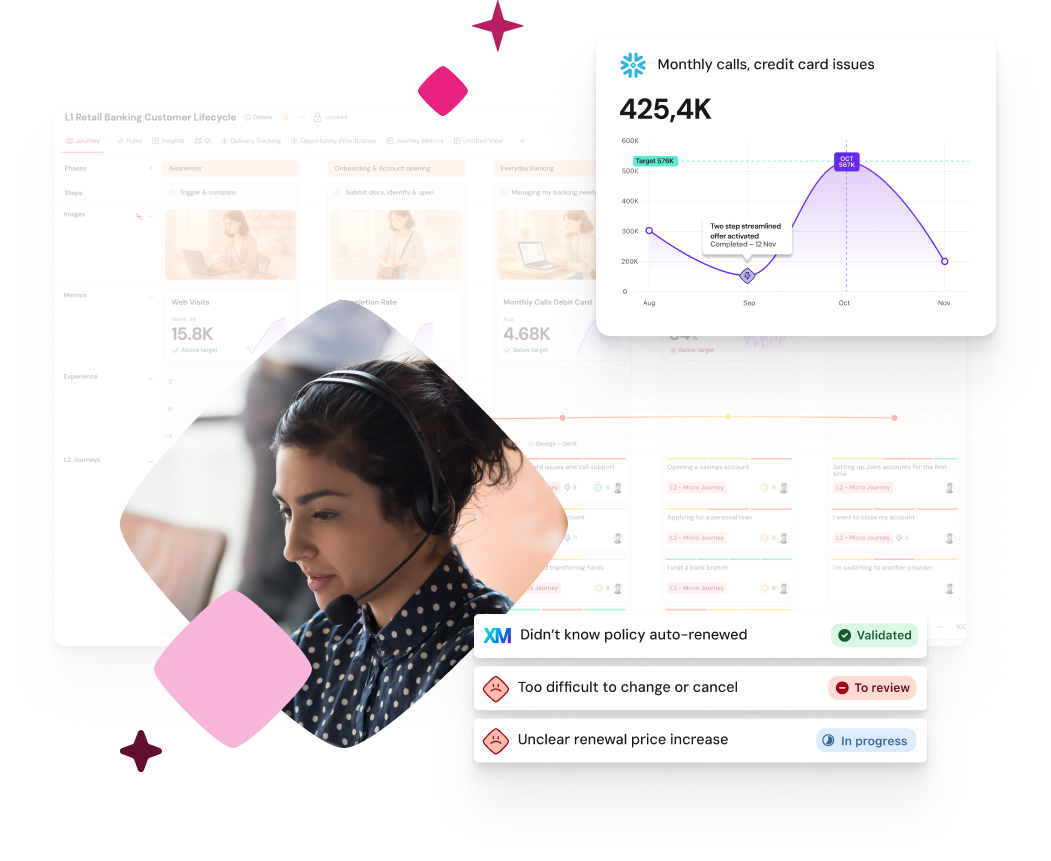
55% of service issues are avoidable. TheyDo traces every call back to the journey moment that caused it — so you can brief the team that owns the fix.











Resolving the call doesn't fix the cause
Service teams have spent years improving call handling with faster times, smarter routing, and AI deflection. The calls keep coming because the fix lives with the team that owns the source.

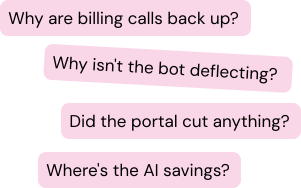
Questions a contact-center dashboard can't answer
Service has the call data and CX has the journey data, but neither connects to the moment that caused the call. The metrics that matter such as call volume, cost per contact, repeat contact rate only move when that gap gets fixed.

Trace every call to the journey moment that caused it
Every avoidable call traces through what service teams usually run separately. Now problems get fixed at the source, before they become calls.
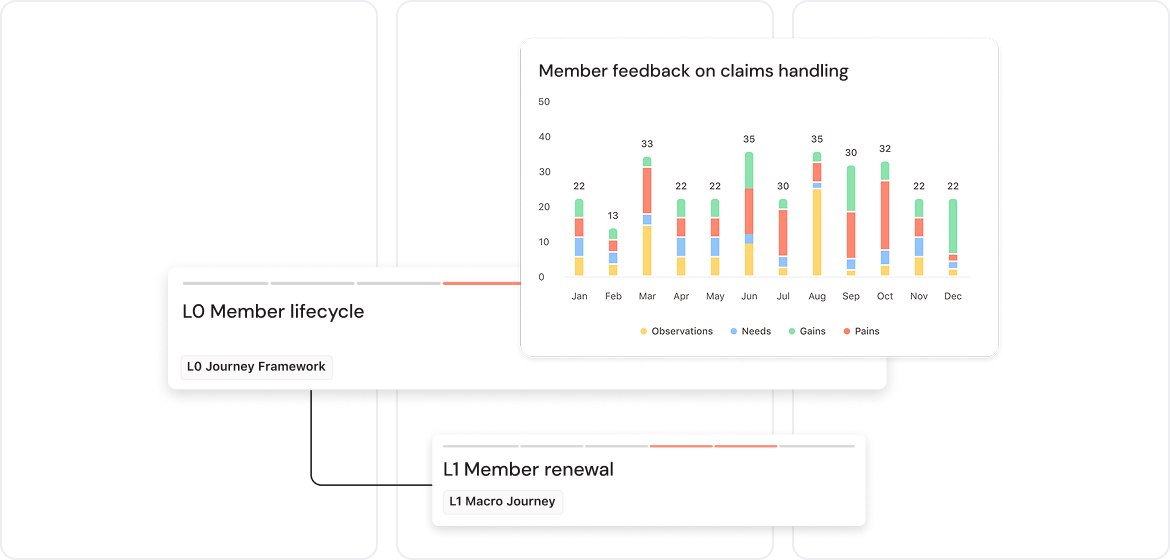
The customer journey
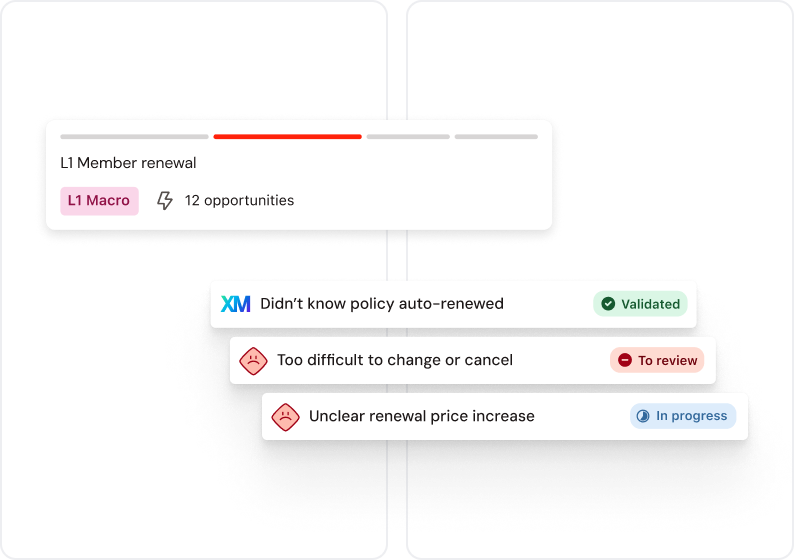
The interaction signal
Loading testimonial...
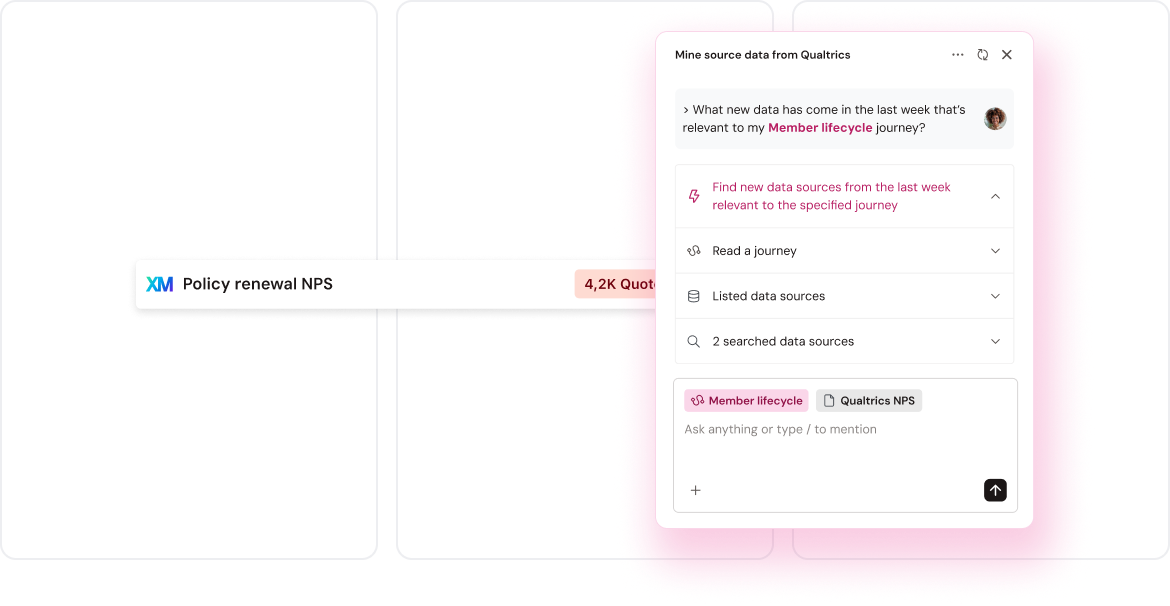
The root cause

How service teams find the source
Pull interaction data
Bring call, chat, and ticket data into TheyDo, linked to the journey steps that triggered them.
Service teams already solving issues at the source
Loading testimonials...
Ready to find the source?
4,000+
hours saved
36%
efficiency lift
5x
time to value
90%
shorter time-to-decision
Frequently Asked Questions
How do service leaders reduce avoidable customer service calls?
TheyDo connects call, chat, and ticket data to the journey moments that triggered each interaction. Service teams can see which avoidable issues come from where, and route the fix to the team that owns the source - product, IT, billing, onboarding - with every claim cited back to the journey step it came from.
How do I find the source of avoidable calls in TheyDo?
TheyDo gives Service a four-step workflow. Pull interaction data - bring call, chat, and ticket data in, linked to journey steps. Find the source - TheyDo Agent clusters avoidable interactions and traces each cluster to where it started. Brief the owners - package the evidence in a Collection scoped to the team that owns the source, with a Doc. Track your metrics - watch them move against the Goal as the source gets fixed.
When should service leaders use TheyDo?
Most Service leaders reach for it when call volume is rising on issues they've solved before, when AI deflection isn't reducing total cost (just shifting it), or when the team needs to make the cross-functional case to product, IT, or billing about fixing the source.
How is TheyDo different from a contact-center analytics tool?
A contact-center analytics tool tells you what calls are coming in. TheyDo tells you why - the specific journey moment where each issue started, and the team that owns the fix. Analytics shows the volume; TheyDo shows the source.
Does TheyDo work across data silos?
Yes - and without needing to match customer IDs. Call volume metrics and qualitative signals (research, tickets, transcripts) map to the same journey step independently. The correlation emerges from the experience structure itself, not from joining databases that were never designed to talk to each other.
Does this actually work?
Yes. EnBW cut 4M call minutes by tracing avoidable interactions back to the digital onboarding gap. Rabobank saved €1.3M annually on cost-to-serve while improving CX metrics. PwC UK reduced cost-to-serve up to 80% on client engagements. Every claim cites its source, so the case doesn't break under scrutiny.
How do we make service strategic, not reactive?
By giving service teams a way to advise other functions on the calls they're causing. Collections package the journey context for the team that owns the source - product, billing, IT, onboarding. Docs translate it into the language they recognize. TheyDo Agent answers their questions in plain English, with sources attached. Service teams shift from handling calls to preventing them.