Meet the TheyDo Agent
Build the customer context for your teams, and AI.
Mine, map, and manage customer context at enterprise scale. With TheyDo, CX research stops dying in decks, journey data doesn’t go stale, and your work serves every team in the business.
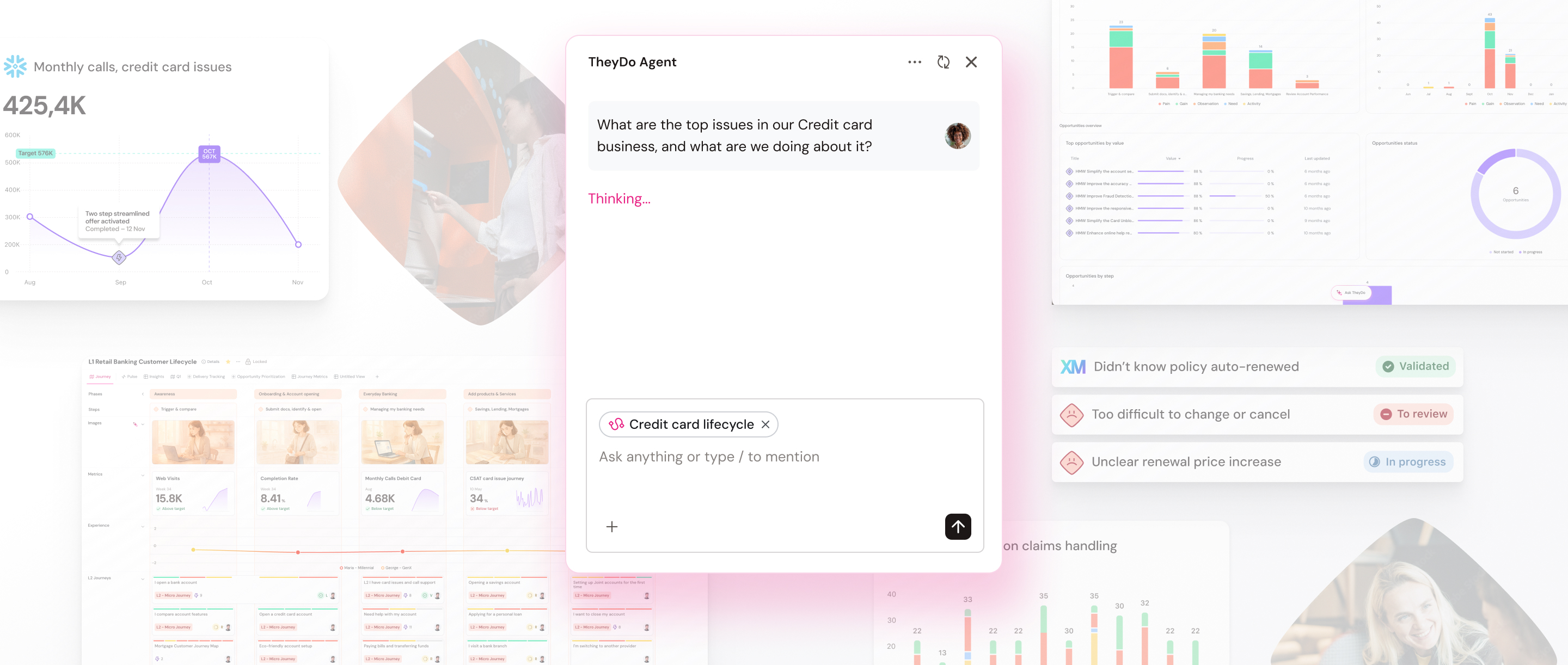












Most CX efforts don’t connects the dots
CX teams produce more insights every year. The work is solid but usually not connected to business outcomes or prioritzation.
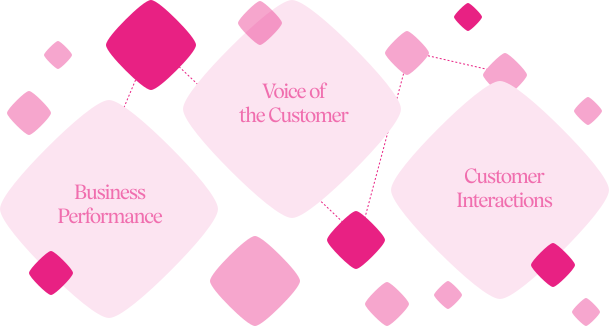
TheyDo connects three things most CX programs run separately
So experience context can serve the whole business.
The research and data in one hub
Unifying interviews, surveys, support tickets, sales call notes in a structured data hub, ready to activate.

How CX teams build experience context at scale, using AI
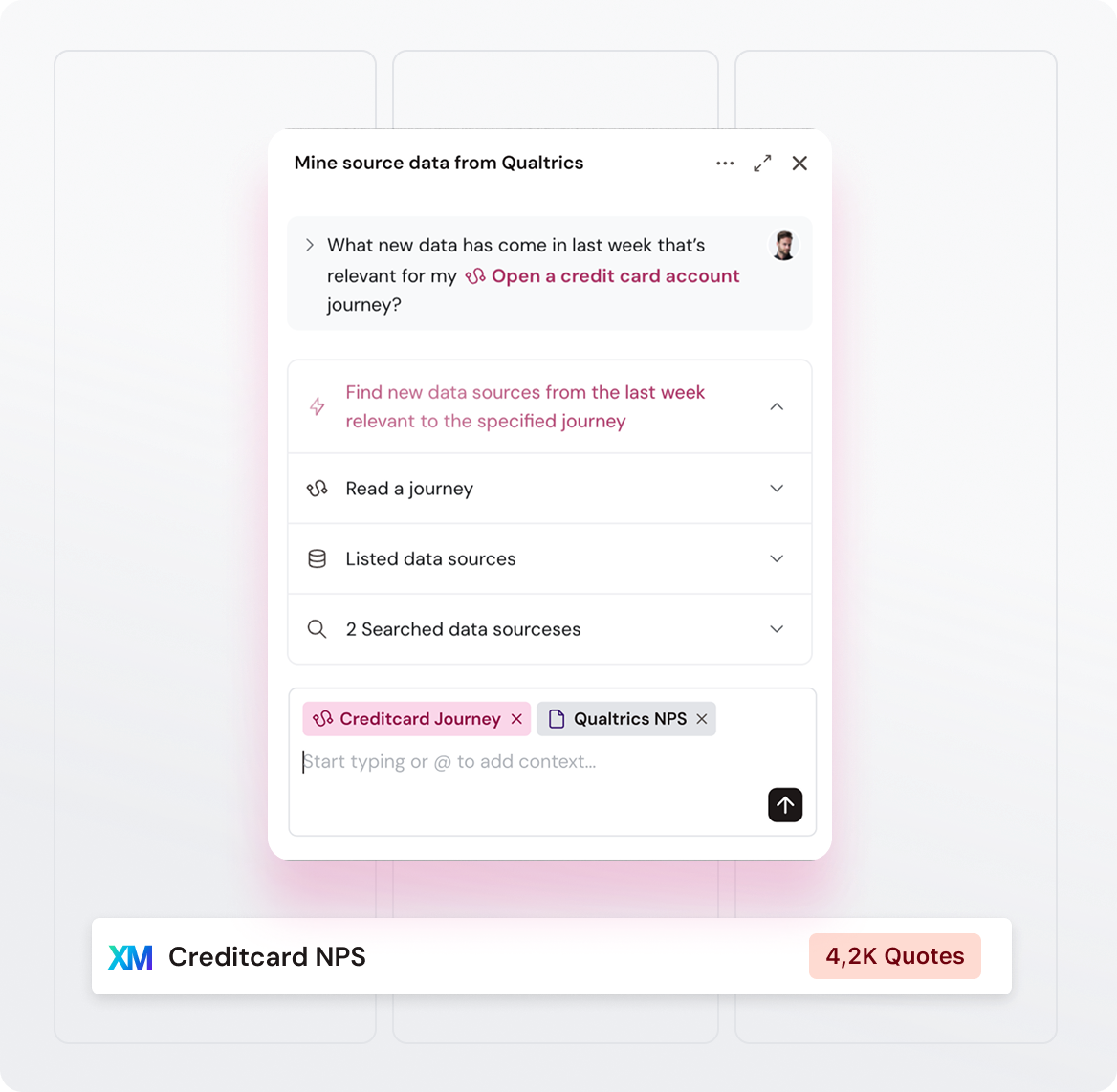
Mine data with TheyDo Agent
Turn transcripts, surveys, support tickets, and interview notes into structured data. Clustering, tagging, and mapping to the journey: TheyDo Agent does the heavy lifting.
Map and maintain end-to-end journeys
Design and maintain end-to-end journeys with phases, steps, and lanes — the living map of the experience your business delivers. Update once; every team sees the latest.
Manage experience context at scale
Link insights, opportunities, and solutions across journeys. Standardize titles and tags. Consolidate duplicates. Govern who can change what.
Customers already building experience context this way
Loading testimonials...

Ready to build
experience context?
4,000+
hours saved
36%
efficiency lift
5x
time to value
90%
shorter time-to-decision
Frequently Asked Questions
What is experience context?
Experience context is the structured, living source of customer truth - research, journeys, and decisions connected in one place. In TheyDo, CX builds it through Mine, Map, and Manage, so it serves every team in your business, not just CX.
How do I build experience context in TheyDo?
In TheyDo, CX builds experience context through Mine, Map, and Manage.
Mine turns raw research - transcripts, surveys, support tickets - into structured, tagged insights linked to the right journey step.
Map designs and maintains end-to-end journeys with phases, steps, and lanes.
Manage keeps the work clean at scale - linking, standardizing, governing. TheyDo Agent does the heavy lifting on Mine and helps with Manage; your team approves every change.
Does TheyDo replace journey mapping tools like Miro or Figma?
For enterprise CX, yes. Miro and Figma store journey maps as static diagrams. TheyDo stores journeys as structured data - phases, steps, opportunities, all linked to evidence and metrics. The map stays alive. The work compounds.
How long does it take to build experience context?
Most CX teams have their first journey in TheyDo by the end of a workshop session. The full enterprise rollout scales over weeks or quarters, not years - because every team works inside the same framework, instead of building their own from scratch.
Who in the business uses experience context?
CX practitioners build and maintain it. CX leaders govern it. Business teams - product, operations, finance, marketing - use it through Collections, AI Docs, and TheyDo Agent. Every leader gets the same evidence, in the language they recognize.